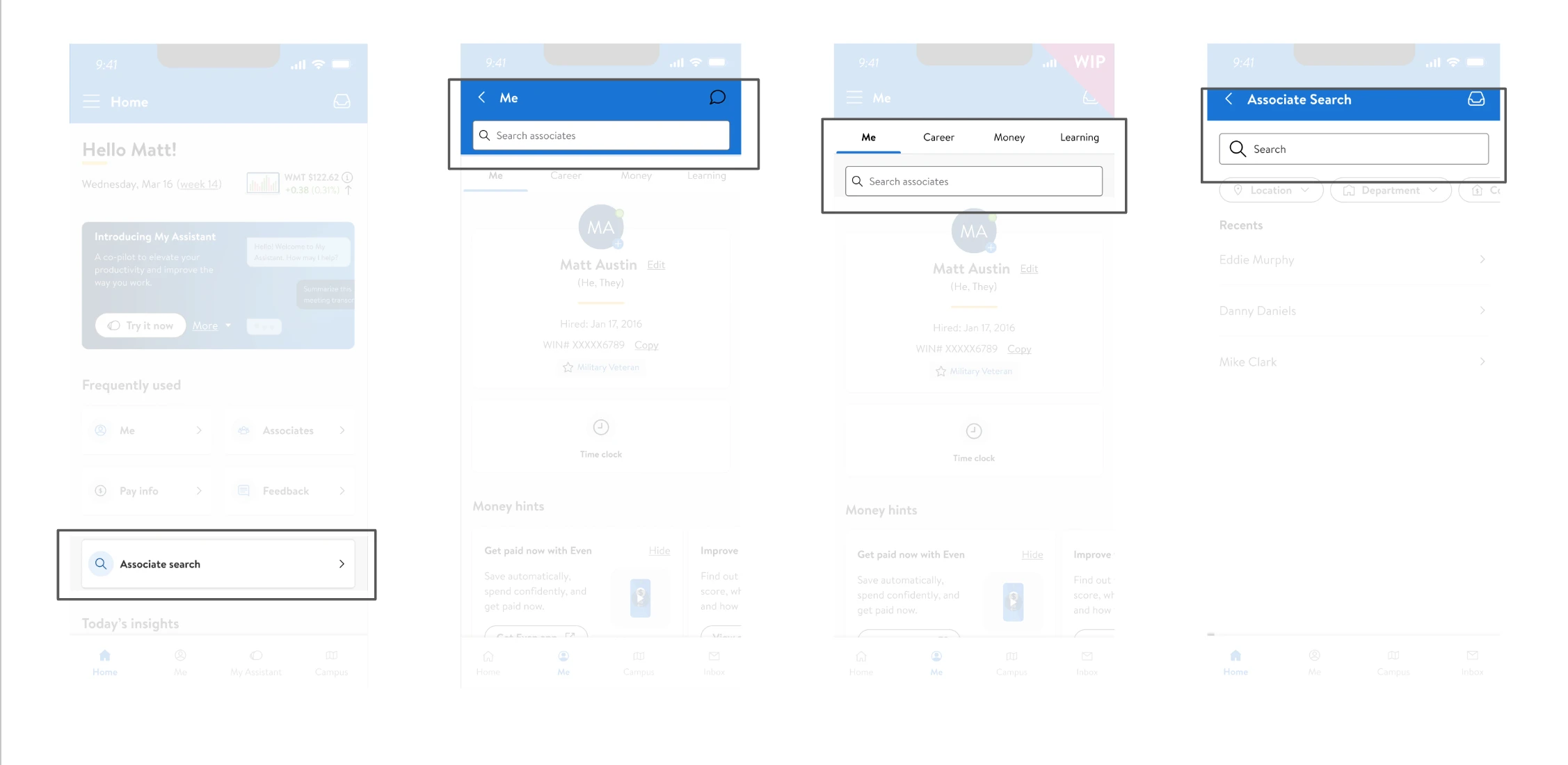
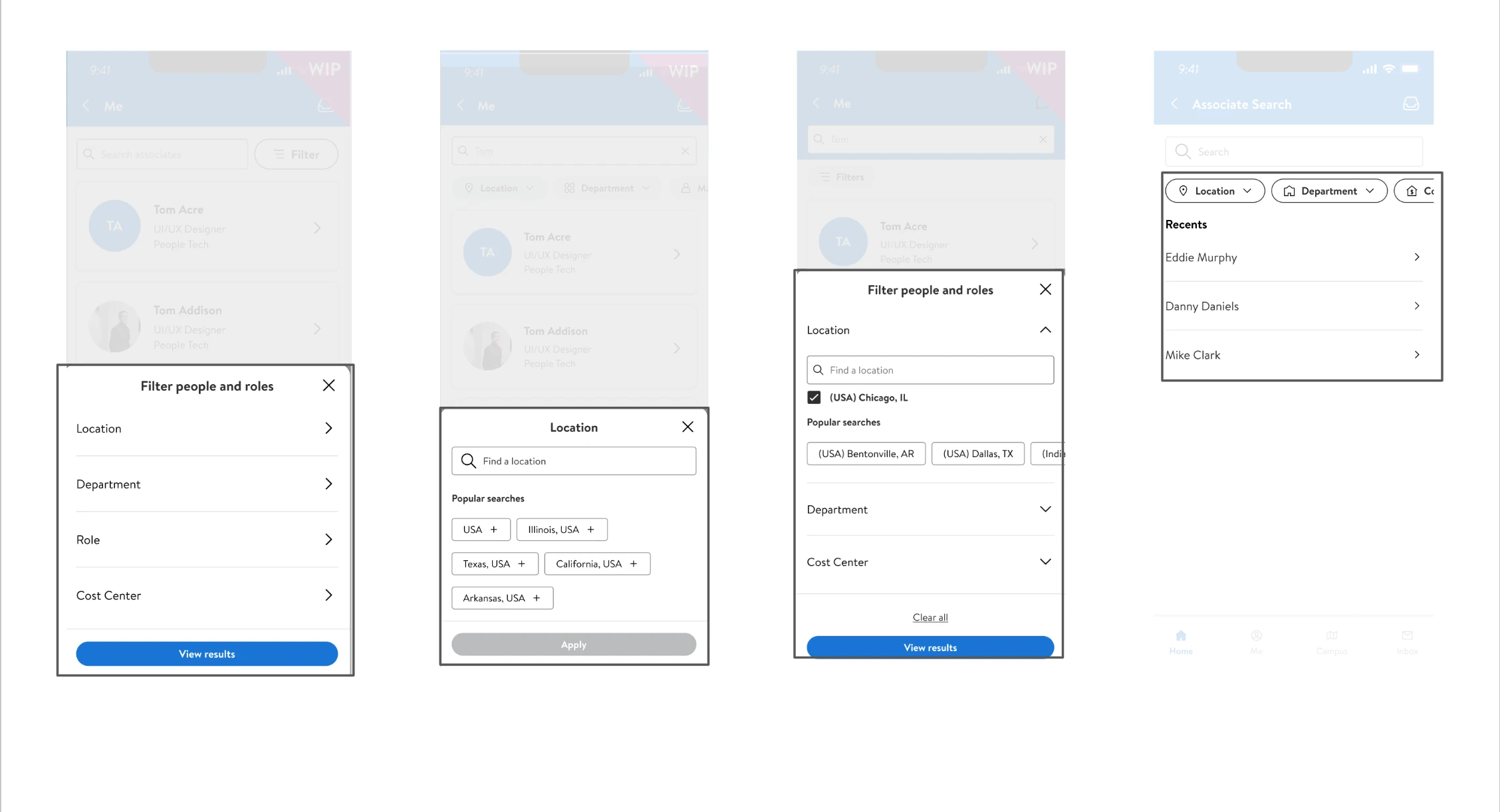
Associate Search
Role:
Staff Designer
Platform:
Mobile/Web
Year:
2023
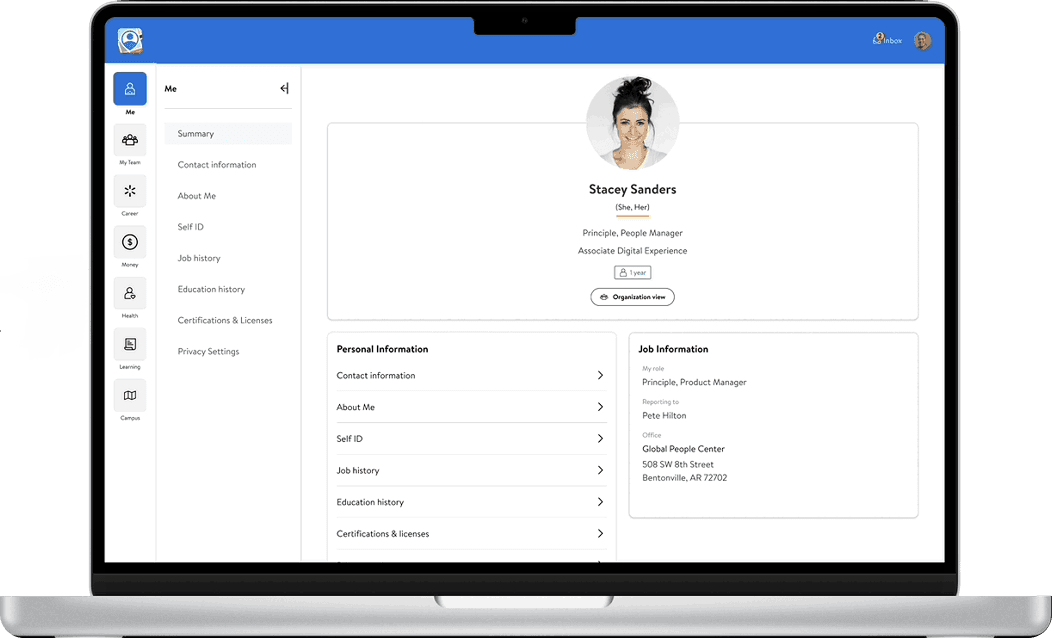
Walmart's 2.1M associates were finding each other through five disconnected directories. None shared a data model. None enforced consistent privacy rules. The interface wasn't the hard part. The work was reconciling three platform teams' competing systems while keeping privacy uncompromised.

01 • FRAMING
This wasn't a search problem. It was a trust problem.
The brief read like a feature request: build a unified search. The reframe that unlocked it, and the one I used to re-sell the project at VP review, was that associates already had ways to find each other. They just didn't trust that any single tool would have the right person, the right info, and stay within what they should see.
The product had to feel authoritative before it felt fast. That shifted three things:
Privacy moved from constraint to feature: visible role-based visibility cues built credibility instead of friction
MVP scope narrowed from "search everything" to "find anyone in your store with confidence"
Rollout sequenced by trust-building surfaces, not feature completeness
02 • STRATEGIC DECISION
Four calls that shaped the product.
Defaulting to less visibility, even when associates asked for more.
Research surfaced strong demand for full org charts and direct contact info. Privacy and legal wanted minimum disclosure. I argued for a role-aware default: managers see direct reports' contact details; peers see what's needed to start a conversation.We lost a feature associates explicitly requested, but the model
shipped uniformly across all 50 states without a regional variant.The data-contract fight.
The hardest stakeholder conversation was with the Workday team. They owned the Workday domain and the integration layer that fed every downstream associate tool, and consolidating onto Me@Campus meant Associate Search would consume their API directly rather than going through the abstraction they'd built. We landed on a direct API integration with them as the ongoing owners of the contract, which kept the work that mattered to them and removed a layer that was slowing every consumer down.Scannable over conversational for high-frequency lookups.
MyAssistant could already answer "who's the produce lead in store 4421?" conversationally. A parallel search surface looked redundant. I made the case that for named lookups, a deterministic, scannable interface beats a generative one: it's faster, doesn't hallucinate names, and is usable on a noisy sales floor without speaking to a phone.Two products, designed as complements rather than competitors.
One codebase, two form factors, no compromises on either.
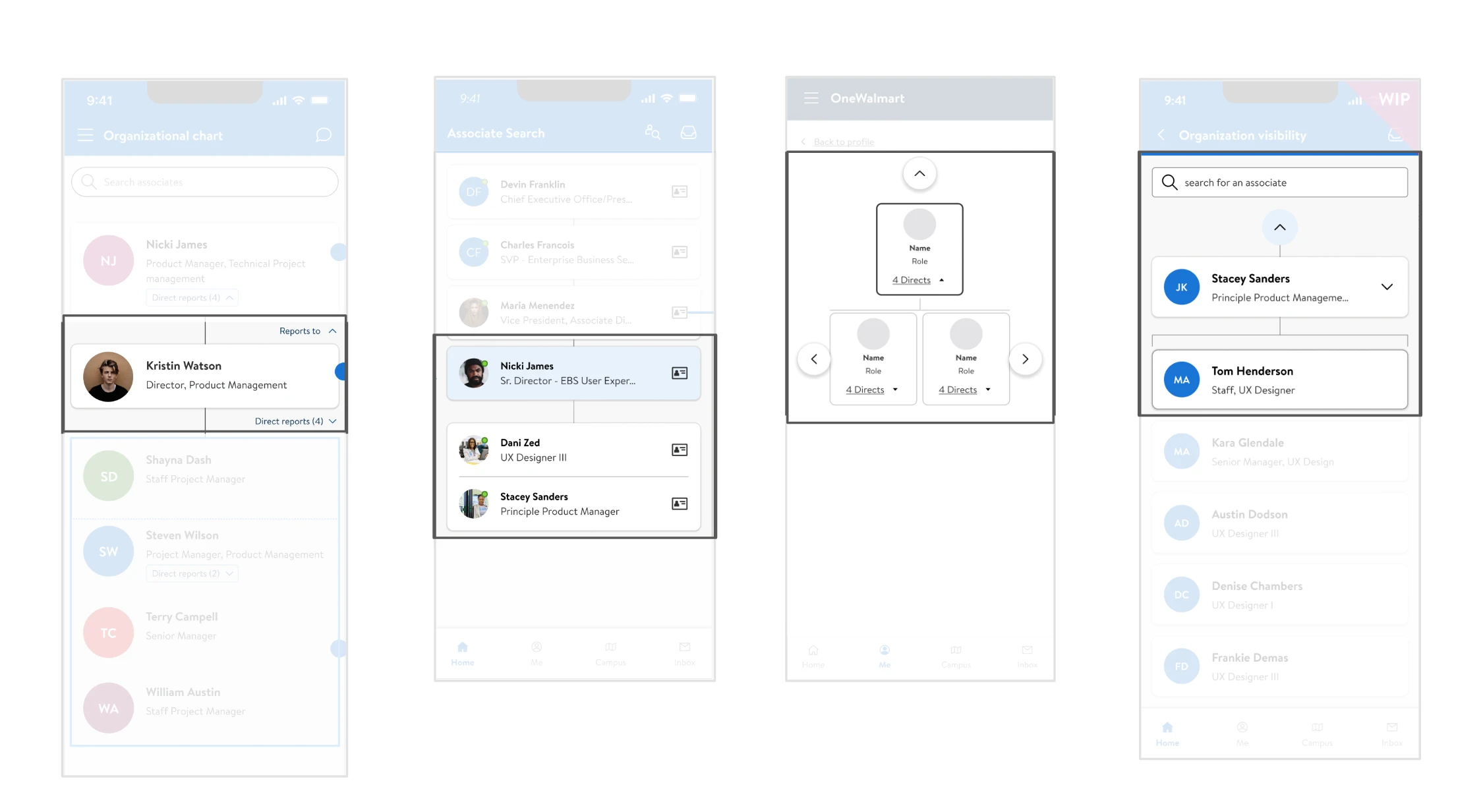
Web and mobile shipped in parallel, not mobile-first then ported. The desktop org chart view used screen real estate to show two levels of hierarchy at once; mobile collapsed to single-line traversal. Same data model, same permission rules, different information density. This avoided the common trap where one platform's compromises become the other's ceiling.
03 • THE PRIVACY ARTIFACT
The visibility matrix
The single most useful artifact we produced. Co-authored with privacy and legal in week 2, this matrix governed every subsequent design decision. Posting it on the wall in the design room meant we never had to relitigate "who sees what" in a review.
04 · DESIGNING ALONGSIDE AI
Where to not use the LLM.
Me@Campus already had MyAssistant, a conversational AI surface. Building a structured search in parallel looked redundant on paper.
I argued the opposite: for high-frequency, high-confidence lookups, a scannable structured surface is the right tool. Generative responses cost latency, risk hallucination, and don't scale to associates who can't speak to a phone in a busy aisle. We designed the two products as complements, with explicit handoffs at the points where structure breaks down.
HANDOFF PATTERN
"Who handles returns escalations?" → routed to MyAssistant.
"Tom Addison's extension" → handled in Search.
05 · CROSS-FUNCTIONAL LEADERSHIP
What I Led
A 4-person design pod (I led, plus 2 product designers and a content designer), embedded with 12 engineers across 3 platform teams
Drove alignment on a unified data contract
Six weeks of work with the Workday, LDAP, and Identity platform teams that determined what was possible in the UI. The UI work couldn't start until this landed.
Partnered with privacy and legal from week 2
A deliberate change from earlier projects where late legal review cost us months. Co-authored the visibility matrix that governed every design decision downstream.Mentored a mid-level designer through the org chart traversal problem
The pattern she developed got adopted in two other Me@Campus surfaces.Reframed the project at VP review
Moved from "directory consolidation" to "trust infrastructure" between rounds 1 and 2. That's what got it staffed at the level we needed.
06 · OUTCOMES
Six months post-launch.
BEYOND THE PROJECT
The role-based visibility model became the default pattern for three subsequent Me@Campus surfaces. The structured-vs-generative framing now informs how the MyAssistant team scopes new conversational features.
06 · REFLECTIONS
PROCESS APPENDIX: EARLY EXPLORATIONS
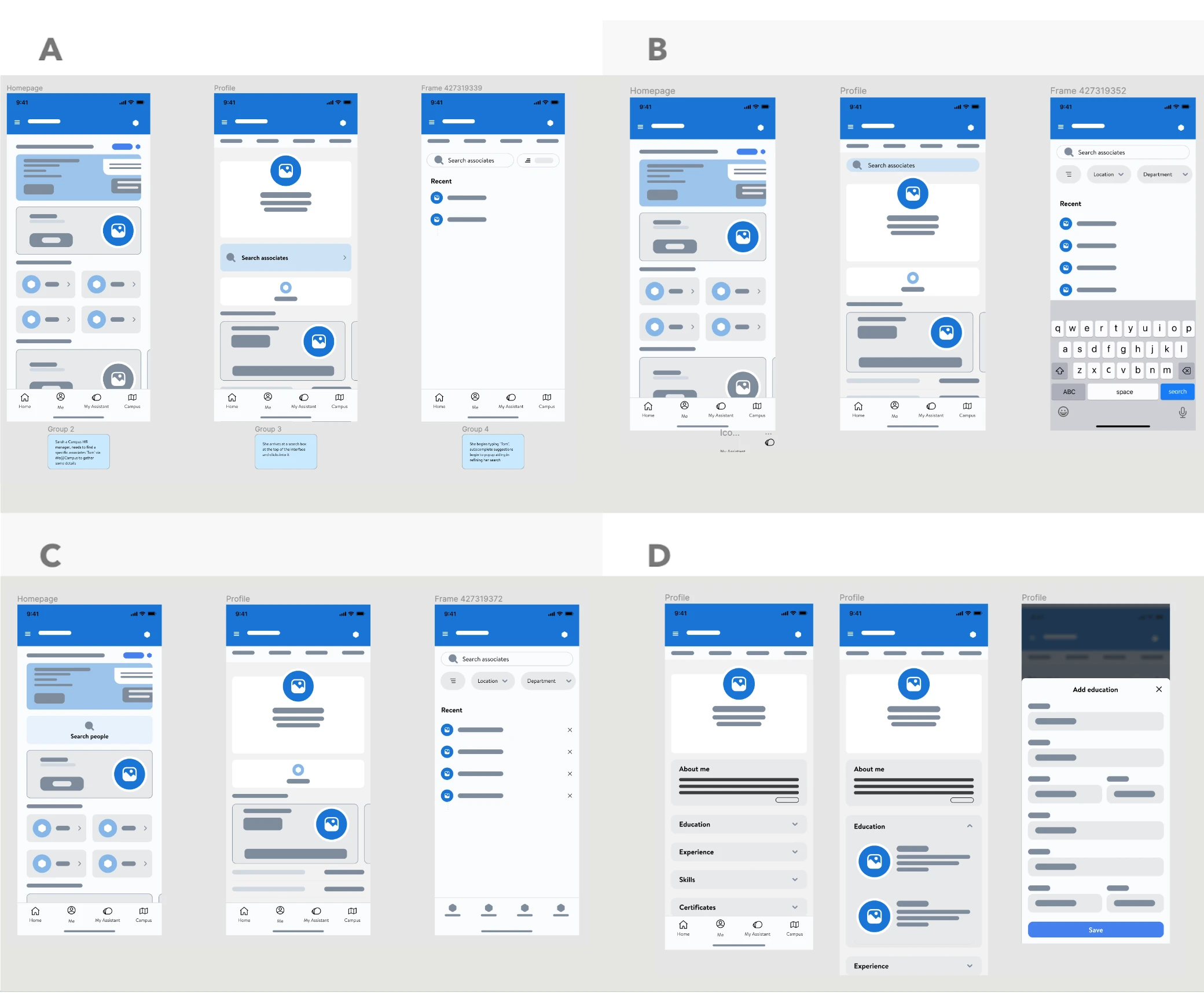
Four directions evaluated against discoverability, navigational consistency, and ease of return.