Me@Campus App
Role:
Design Leader
My Services:
UX/UI design
Year:
2023
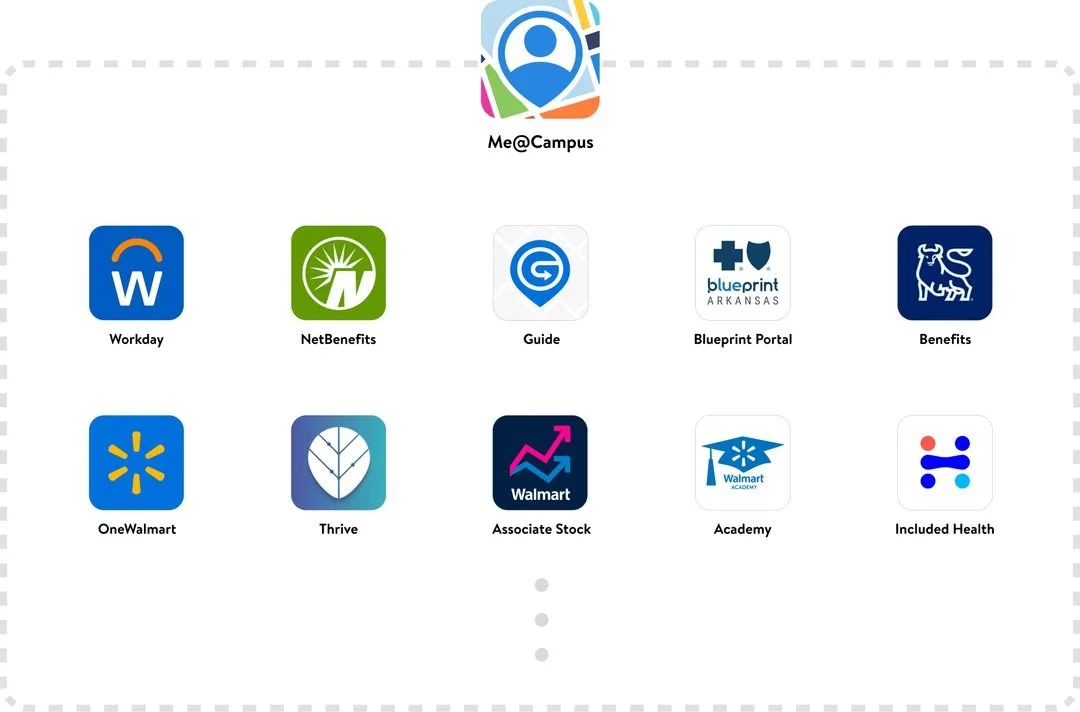
Walmart corporate associates were juggling work-related information across dozens of disconnected applications. The fix on paper was simple: consolidate everything into one platform, Me@Campus.
The actual work was harder. We weren't building one app. We were building a container that 14 mini-app teams would ship into in parallel, with 20+ designers across them, none of whom reported to me.
I led platform design: the structural decisions, the design subsystem layered on top of Walmart's Living Design, and the governance model that let mini-app teams move independently without the surface drifting into 14 different products. The core team was two people: me and a junior designer I mentored into co-ownership of the system.
01 • FRAMING
How I framed it
The brief read like a documentation problem: "maintain consistency across mini-apps." The reframe was the unlock.
Consistency was the symptom. The real problem was authorship. How do you let 20+ designers ship into one product, on different release cycles, without the platform team becoming the bottleneck and without the surface fragmenting into 14 different products?
Once we treated it as a scaling problem instead of a documentation problem, three things shifted. The subsystem had to be self-serve, not gated. Decisions about which mini-app went where had to be principled and contestable, not political. And governance had to operate at three different layers, because no single mechanism scales.
02 • STRATEGIC DECISIONS
Four calls that shaped the platform.
Subsystem, not fork. Walmart's Living Design covered the foundations: brand, type, color, atomic components. It didn't cover the patterns Me@Campus needed: navigation across mini-apps, information density for data-heavy associate surfaces, tabular layouts, and the specific contract between platform and mini-app.
I built the Me@Campus subsystem on top of Living Design rather than diverging from it. We inherited LD's constraints when they didn't quite fit, but we never had to backport, never had to maintain a parallel system, and the broader Walmart ecosystem stayed legible. Principle: extend the system above you when you can. Fork only when you must.
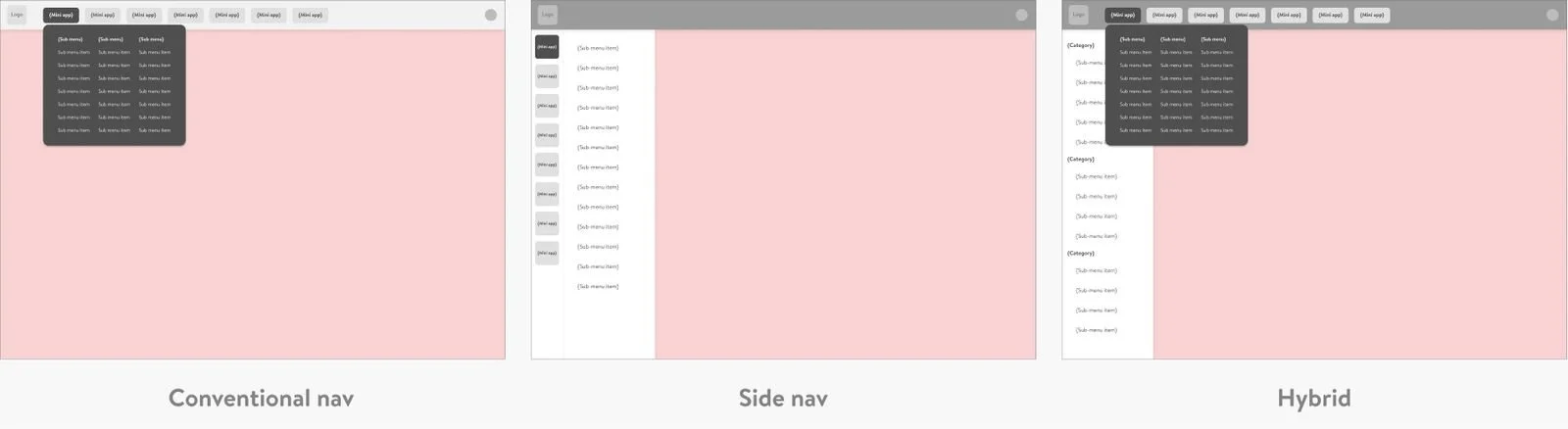
Side nav over hybrid, deliberately conservative. Competitive analysis surfaced three structures: conventional, side nav, and hybrid (Amazon-style). Hybrid was the richest pattern and the most tempting. I picked side nav because I was optimizing for the 15th, 16th, and 17th mini-app, not the first three. The platform was growing fast; the navigation needed to absorb that growth without restructuring. Principle: design the navigation for the version of the product you'll have in two years, not the one you have now.
Tiered entry point as a system, not a decision. Mini-app teams were going to compete for prominent placement on the home surface. Without a system, every quarter would have been a political negotiation, and I'd have been the arbiter every time. I designed a tier system that combined card-sort research with usage analytics to rank mini-apps automatically. The system arbitrates; I don't. Principle: when you can't be in every room, design a system that decides without you.
03 • THE GOVERNANCE SYSTEM
The mesh, not the checklist.
The most distinctive thing about this project isn't the visual design. It's the three-layer governance model that kept 20+ designers from drifting into 14 different products.
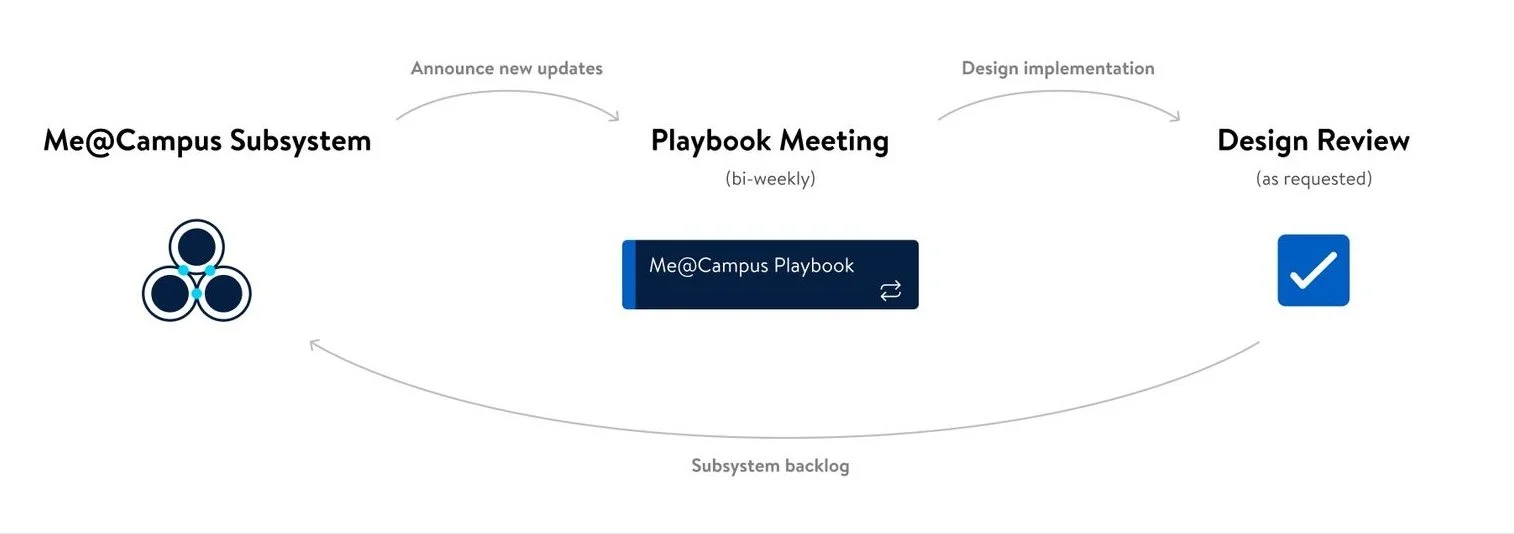
Layer 1: The subsystem (artifact) A Figma library of master components that mini-app designers drag and drop into their files. I owned the design, refinement, and documentation; mini-app teams owned how they composed those components.
Layer 2: Playbook meetings (communication) Bi-weekly meetings I facilitated, where the core team announced subsystem updates, surfaced cross-app issues, and gathered feedback from the platform's contributors. The Playbook was the channel; the subsystem was the artifact.
Layer 3: Design reviews (inspection) Optional review sessions where mini-app designers brought work for the core team to evaluate against Me@Campus standards. Optional was deliberate. Forced reviews create resentment and back-channel workarounds; voluntary reviews surface the designers who want feedback and reveal which teams might be drifting.
The key idea was redundancy. If a designer missed a Playbook meeting, they caught the update when they pulled components. If they skipped review, the next Playbook surfaced the issue. If they did both, the subsystem itself constrained how far off pattern they could ship. No single layer was load-bearing.
04 • THE STRESS TEST
The iPad rollout the system wasn't built for.
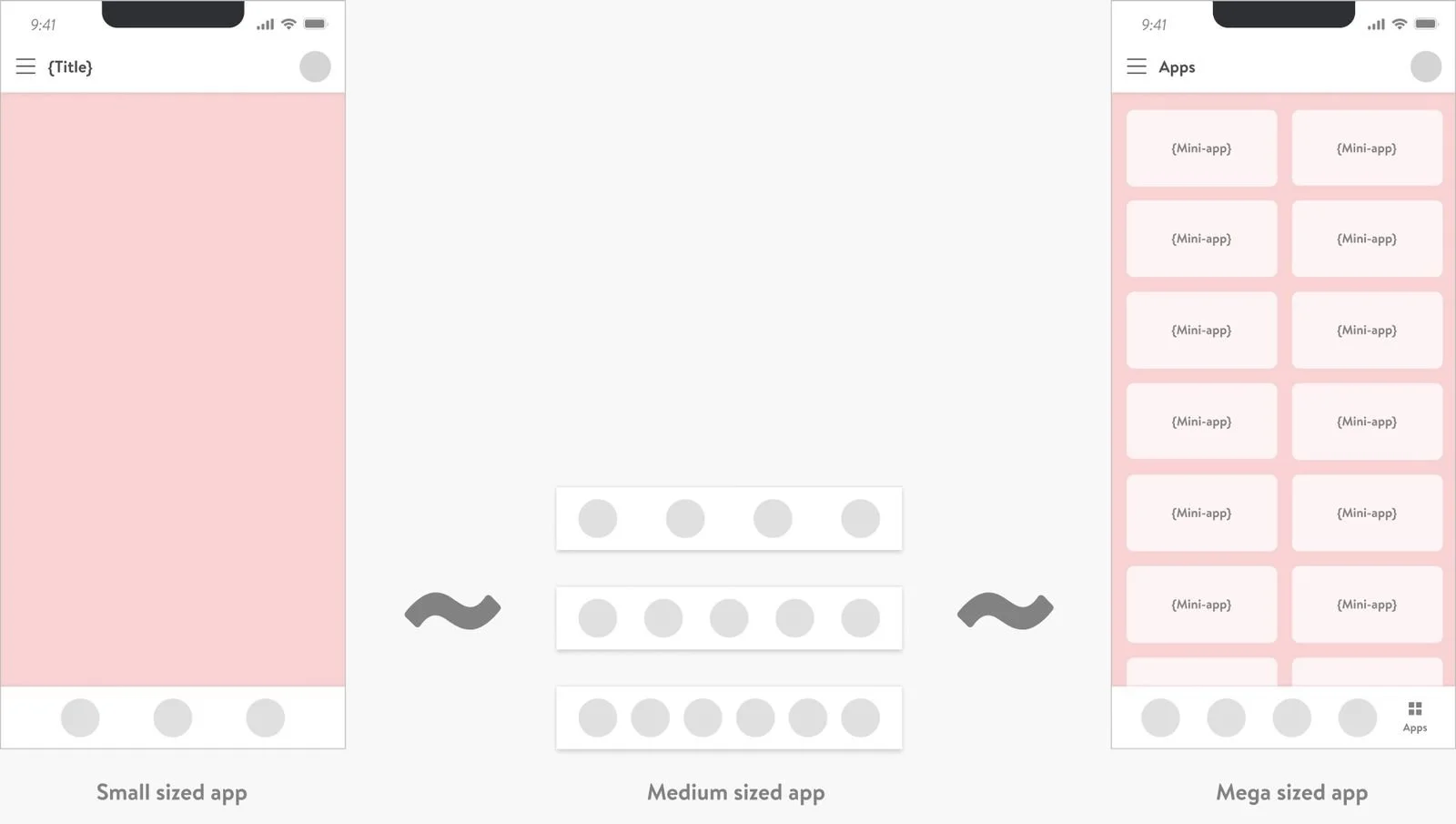
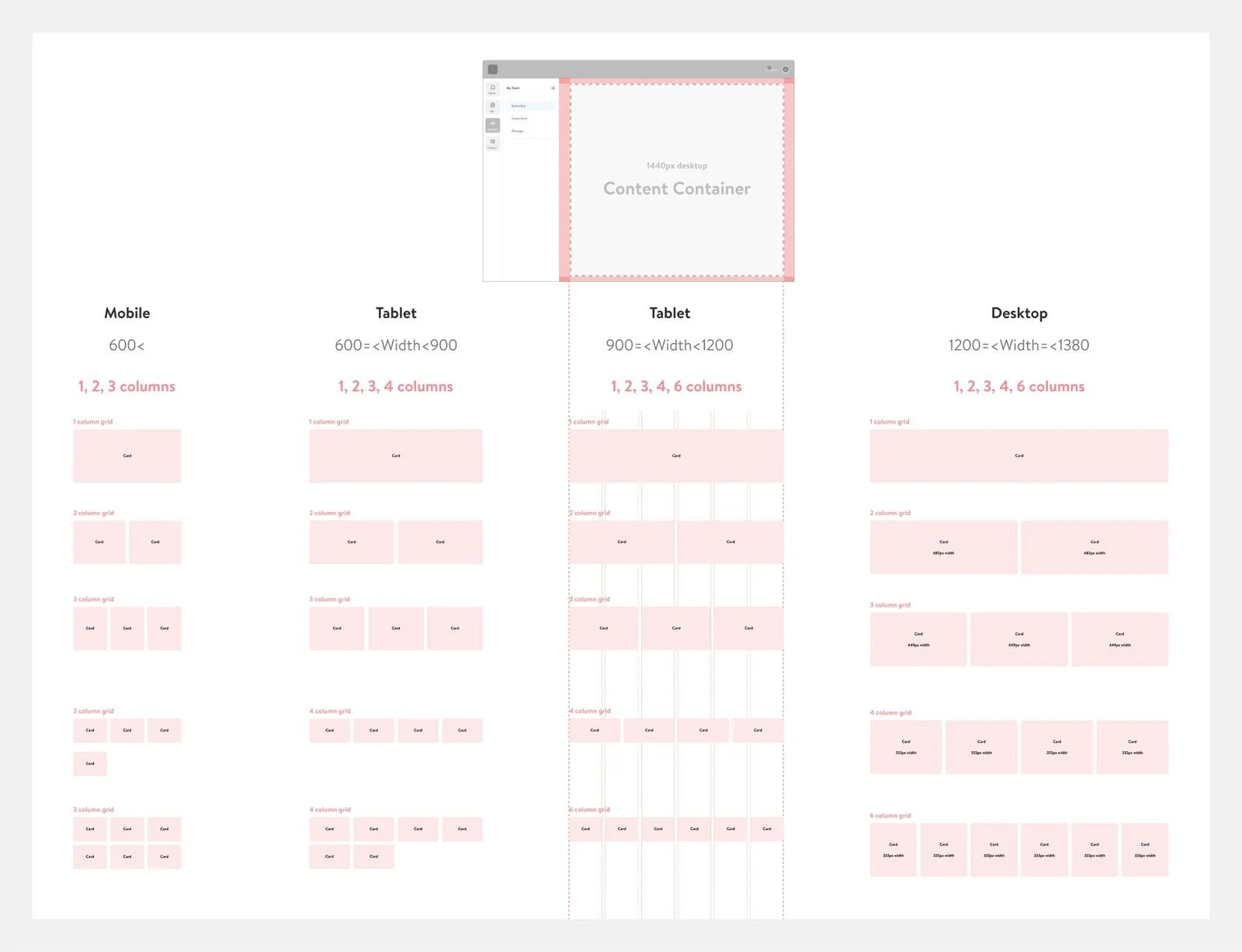
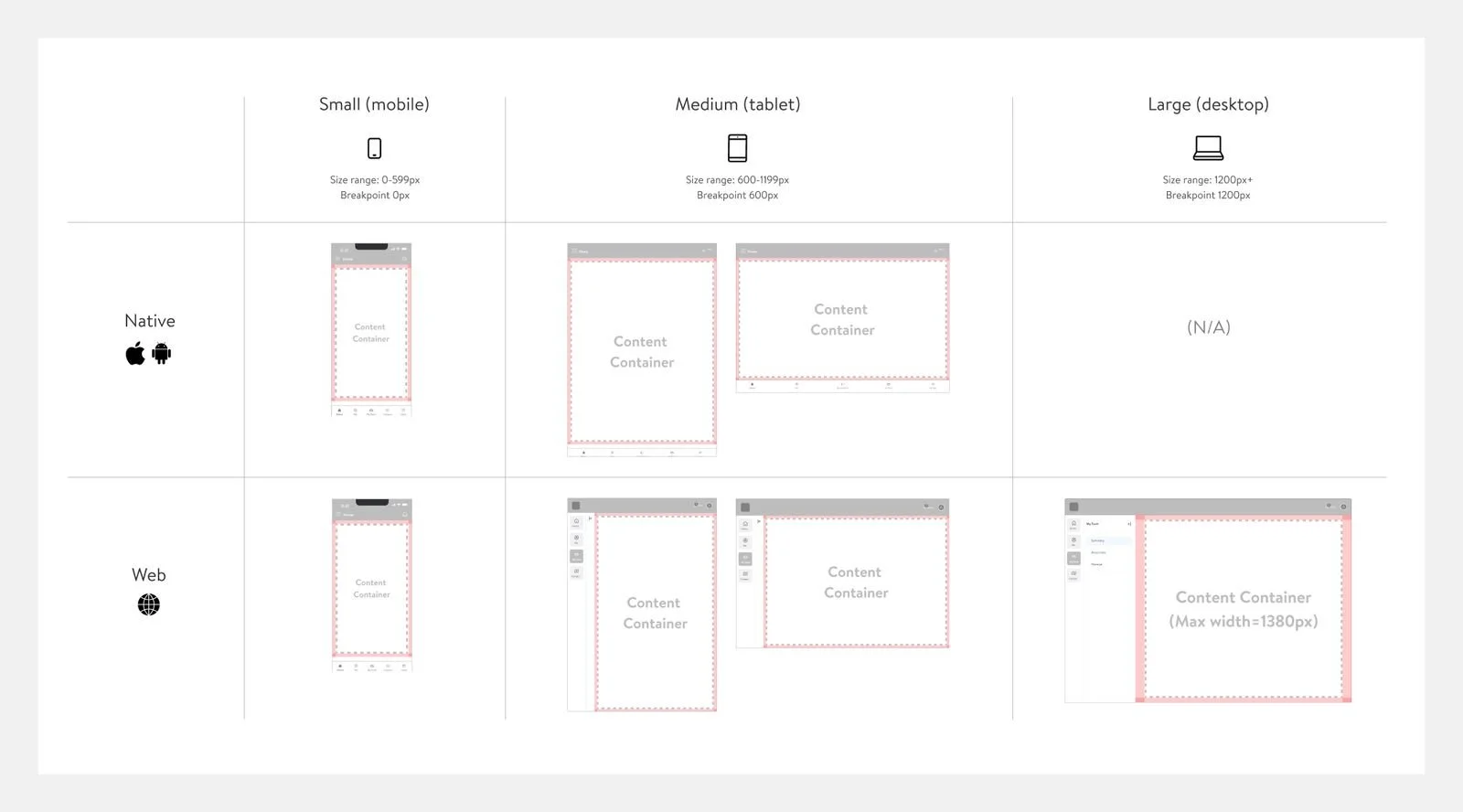
Walmart rolled out iPads to a large segment of corporate associates. We had designed the subsystem for three breakpoints (small, medium, large) optimized for phone and desktop. Tablet hadn't been a priority on the roadmap. Overnight it became the dominant secondary device.
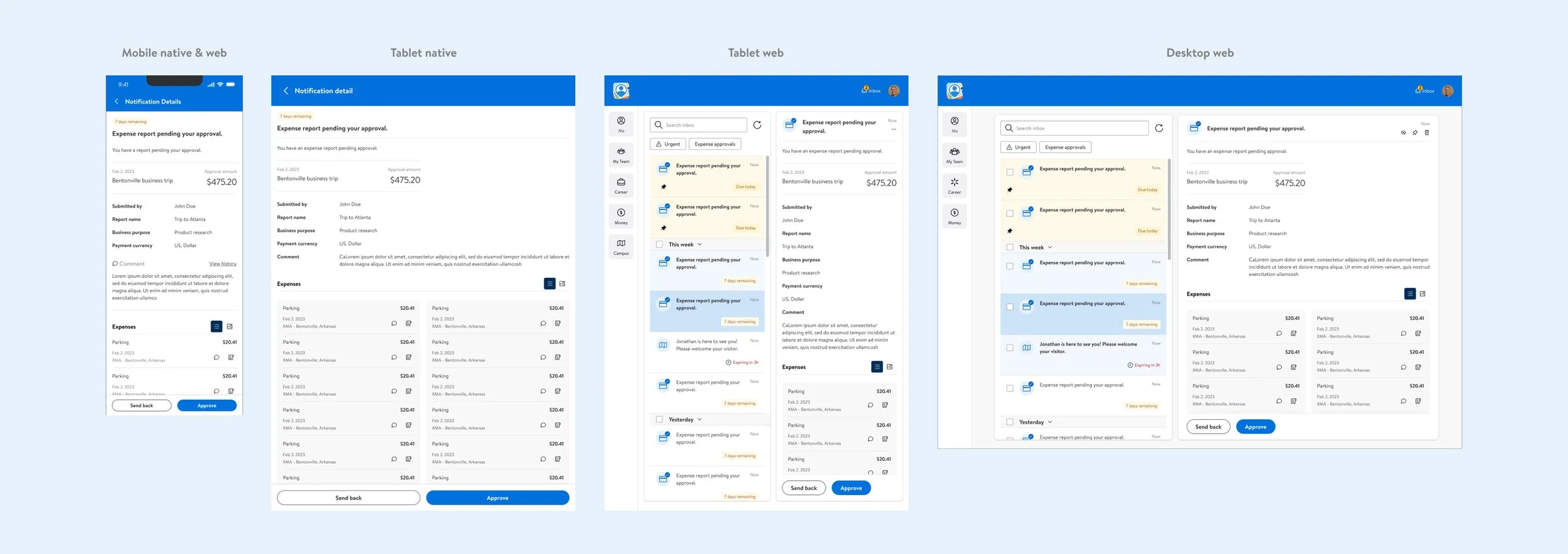
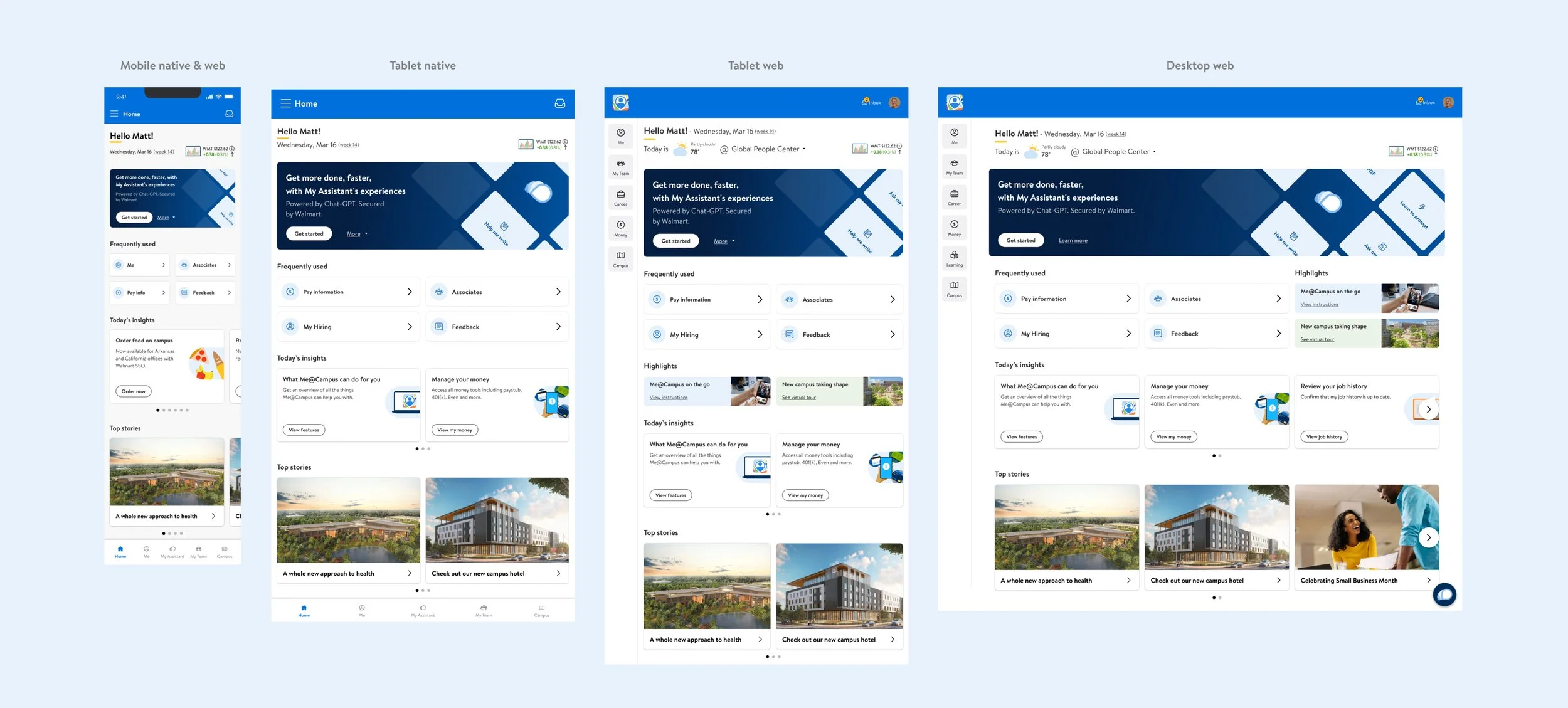
We scaled the system fast. Within [ANDY: how many weeks?] the core team extended component layouts to accommodate the tablet breakpoint, updated the responsive guidance in the subsystem documentation, and ran an emergency Playbook session to align mini-app teams on the new patterns before they shipped half-broken tablet experiences.
This was the moment the three-layer governance model paid off. The subsystem update was the artifact, the Playbook was the communication channel, and design reviews caught the mini-apps that hadn't migrated yet. A single-mechanism approach (docs alone, or reviews alone, or a one-time announcement) would have left fragments of the platform stuck on the wrong breakpoint for months.
The lesson cuts both ways. The system survived the stress test because it was redundant by design. But the stress test itself was avoidable: I'd have designed for four breakpoints from the start instead of treating tablet as a bolt-on.
05 · CROSS-FUNCTIONAL LEADERSHIP
Two on the core team. Twenty on the platform.
This was a 2-person core team (me, plus a junior designer I mentored into co-ownership), governing the work of 20+ designers across 14 mini-apps.
Built and maintained the Me@Campus subsystem on top of Walmart's Living Design, filling the gaps Living Design didn't cover (cross-mini-app navigation, density, tabular layouts, platform-to-mini-app contracts)
Facilitated bi-weekly Playbook meetings as the primary cross-team communication channel
Designed the Tiered entry point system that arbitrated mini-app placement decisions without me being in the room
Scaled the responsive system to four breakpoints under launch pressure when iPad adoption forced the move
Mentored the junior designer on the core team through subsystem ownership, including the tablet rollout
06 · OUTCOMES
Five months in.
By mid-Q1 2024, Me@Campus had 30,000 active users out of 50,000 corporate associates: 60% adoption against a 70% end-of-quarter target, on pace to land within range.
The clocking mini-app alone drove $36M in annual savings through a combination of recovered hours, fewer payroll miscalculations, and reduced timekeeping errors.
BEYOND THE PROJECT
Ten teams beyond Me@Campus adopted the tier system or elements of the governance model. The pattern outlived the project, which is the outcome that matters most for platform work.
06 · REFLECTIONS
PROCESS APPENDIX
Early structural exploration evaluated three navigation patterns:
Conventional nav. Top nav with dropdowns. Suitable for apps with stable IA.
Side nav. Persistent vertical navigation. Scales to many sections, transparent option surface.
Hybrid. Amazon-style combined nav with mega-menus. High capacity, high complexity.
Side nav was selected. Hybrid stays deferred as a future option if Me@Campus grows past what side nav can comfortably hold.